Should You See an EP or Physio After Injury?
“I rolled my ankle (or tweaked my back) and I’m not sure who to book. Do I need a physio or an exercise physiologist?” We get that question on the phone almost every day, and the honest answer is that it depends on where you are in the injury.
As a rough rule, a new injury is usually best started with a physiotherapist, who can work out what has been hurt and settle it down. An exercise physiologist (EP) tends to take over once you need a structured plan to rebuild strength and get back to full activity. Plenty of people need both, in that order.
Who Faces This Choice, and What It Feels Like
We see it after a sprained ankle, a pulled hamstring, a tweaked back from lifting, a sporting collision, or a workplace strain. We also see it in people whose injury “never quite settled”, who are walking normally again but cannot trust the joint, or who hit about 80 percent of where they were and stall.
The confusion is understandable. Both professions prescribe exercise, both work with injuries, and the job titles do not tell you much. Add the question of what Medicare or your private health fund will cover, and many people book nothing at all and hope it improves.
How Injury Recovery Actually Works, and Who Does What
Most muscle, tendon and ligament injuries move through overlapping stages. Different skills matter more at different points, which is the real reason the two professions exist side by side.
The Early Phase: Working Out What Is Injured
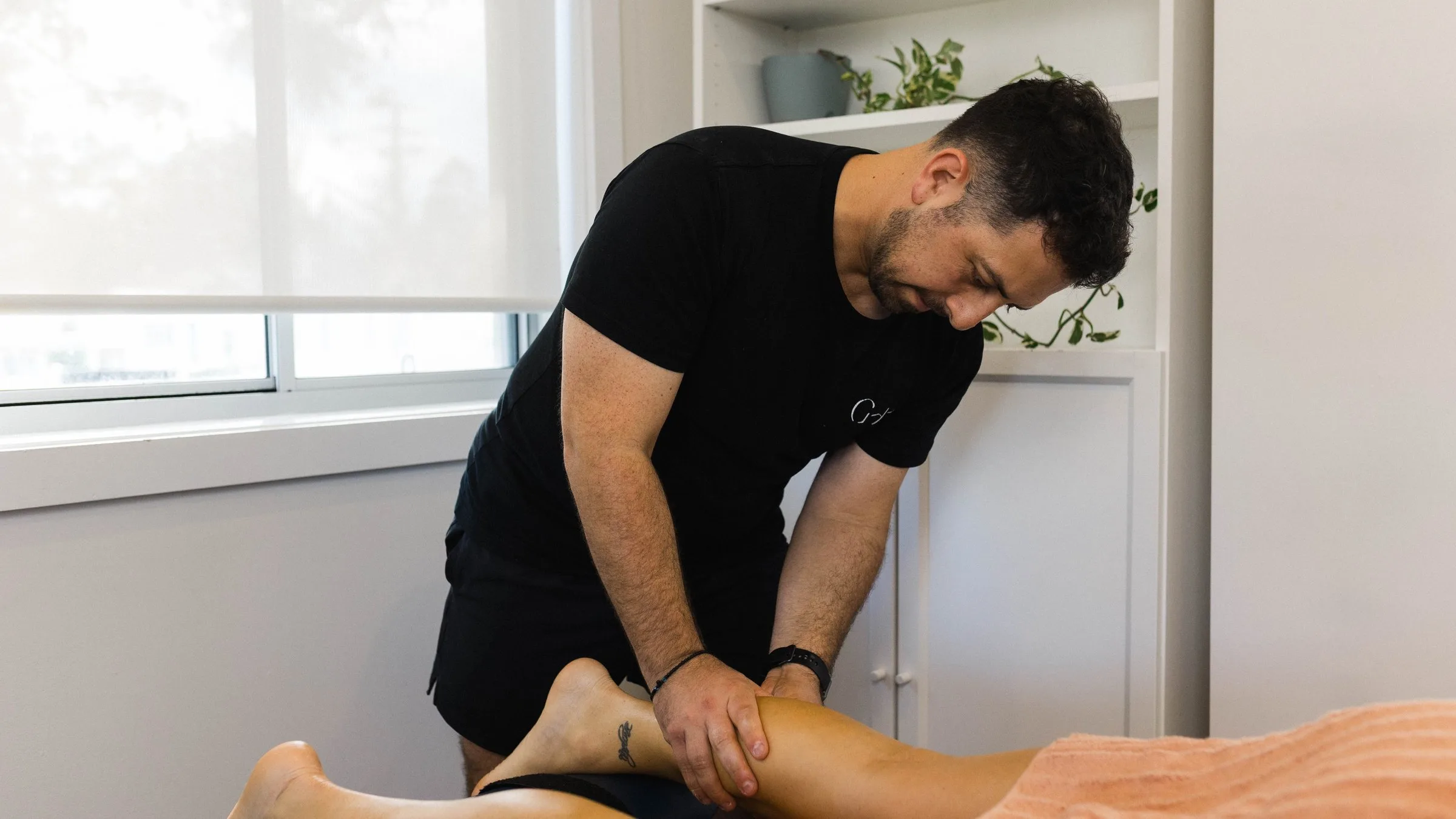
In the first days, the priority is understanding what has actually been damaged and whether anything serious is involved. Physiotherapists are trained to assess, diagnose and treat injuries, and they can examine, test the joint, and decide whether you need a doctor or imaging. This is the stage where a diagnosis shapes everything that follows.
The Repair Phase: Calm It Down Without Switching It Off
Protecting a fresh injury makes sense, but complete rest for long periods does not. A widely cited editorial in the British Journal of Sports Medicine notes that prolonged rest can compromise tissue strength and quality and stresses educating patients and addressing psychosocial factors such as fear of movement.
That is why a good early plan combines protection, gentle movement, and clear advice on what to expect. Pain signals guide how quickly you progress, and a physio adjusts this week by week.
The Rebuilding Phase: Restoring Strength and Capacity
Once the injury has settled, the problem changes. The tissue may be healed but is often weaker and less conditioned than before, and it will fail again if you simply return to full load. The published scope of practice for exercise physiologists includes rehabilitation and advice following the acute stage of injury, to restore functional capacity, which is exactly this phase.
An EP builds and progresses a structured program, usually with a gym setting and equipment behind it. The focus is strength, tendon loading, mobility and endurance, increased in steps your body can tolerate.
The Return Phase: Back to Sport, Work and Life
Returning to a sport or a physical job takes more than a pain free day. You need strength and power that match the demands of the activity, plus confidence on the injured side. This is a shared job, with the physio checking movement quality and the EP building the conditioning that makes the return stick.
When Pain Has Become Persistent
Some injuries linger, or flare repeatedly, or sit alongside a long term condition such as arthritis. Here the emphasis moves from fixing a single event to managing load and building capacity over months. Exercise physiology is often central at this stage, with physiotherapy used to settle flare ups and review the diagnosis.
What People Often Get Wrong About the Two Roles
“An EP is just a personal trainer.” An Accredited Exercise Physiologist is a university qualified allied health professional, and the program is built around your injury, health conditions and goals rather than a generic template.
“A physio only does massage and manipulation.” Manual therapy is one tool among several. Exercise is a cornerstone of physiotherapy, and a good physio will usually have you moving within the first session.
“EPs only work with diabetes and heart disease.” Chronic conditions are a big part of their work, but injury rehabilitation is just as central. And “I have to choose one” is the biggest myth of all, since the two often work in sequence or alongside each other.
Red Flags: When to Get Medical Care Urgently
Neither a physio nor an EP is the right first stop for the signs below. Please seek urgent care from a GP, an urgent care clinic or an emergency department, and call 000 if you have chest pain, trouble breathing, or a head injury with confusion.
- You cannot put weight on the limb after an injury, or the joint looks out of shape
- Severe swelling or bruising that appeared within hours of a significant impact or fall
- Numbness, pins and needles, or weakness that is spreading, or any change in bladder or bowel control
- A joint that is hot, red and swollen, especially with a fever or feeling unwell
- Calf pain with swelling and warmth, particularly after surgery, a long flight or a period of immobility (this can signal a blood clot)
- Constant pain that is severe at night and unrelated to movement, or unexplained weight loss alongside it
If any of these apply, see a doctor first. We are always glad to pick up your rehabilitation afterwards.
What to Do in the Short Term
If none of the red flags apply, these steps are generally reasonable while you arrange an assessment.
- Protect, then move. Avoid what clearly hurts for the first few days, but keep gentle movement going rather than resting completely.
- Support the area if it helps. A bandage or tape can limit swelling and make walking more comfortable, and raising the limb can ease puffiness.
- Ask before taking anti inflammatories. Speak to your pharmacist or GP about pain relief. The same editorial suggests anti inflammatory medicines may interfere with tissue repair, and they are not suitable for everyone.
- Write down what happened. How the injury occurred, what hurts, and what you can no longer do will help the clinician work out the cause quickly.
- Do not keep testing it. Repeatedly checking whether the joint “still hurts” by loading it hard tends to set recovery back.
- Book within a few days. If you are still limping, cannot use the area normally, or are not clearly improving, get it assessed rather than waiting for it to resolve.
How We Decide, and How We Treat
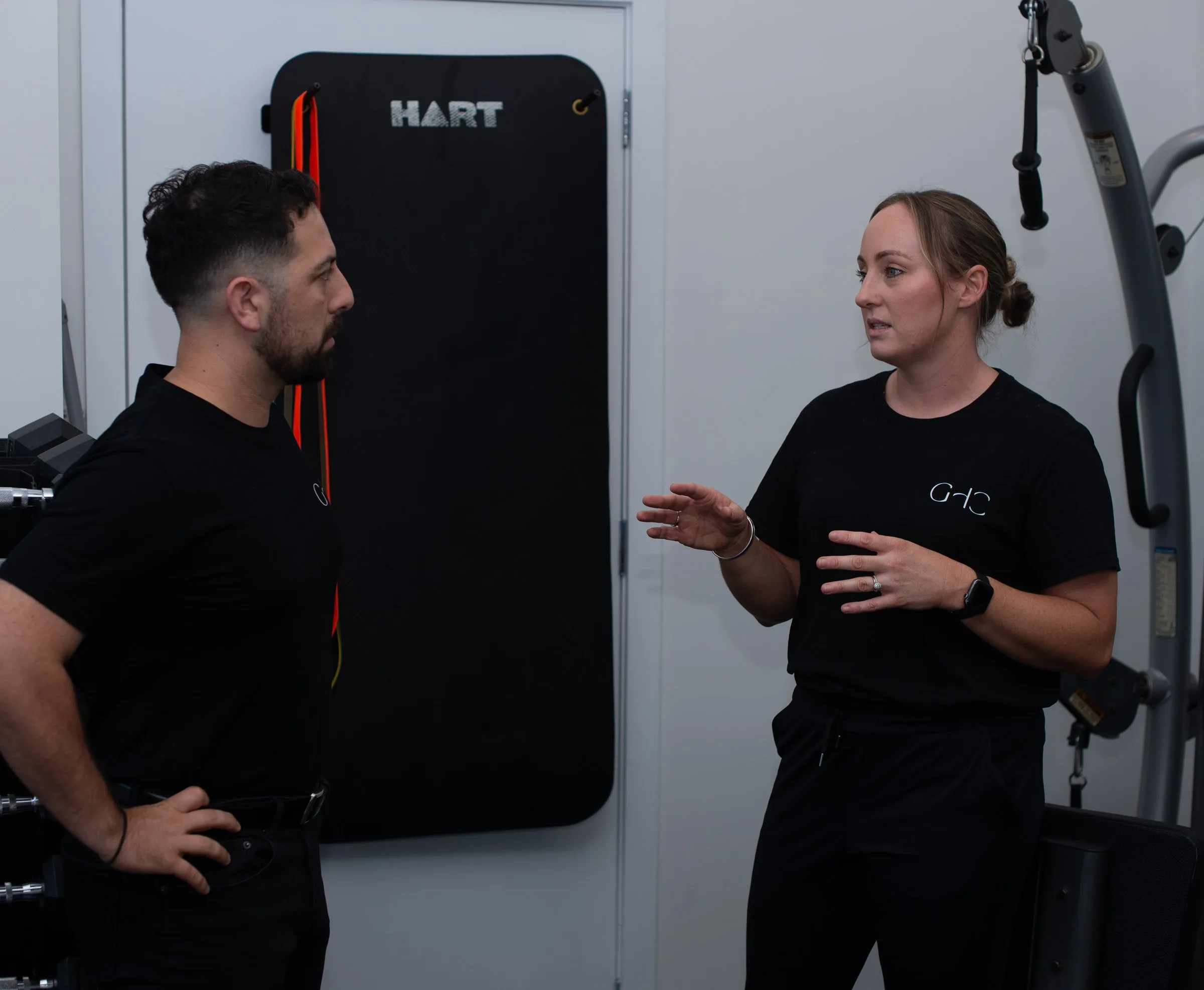
You do not need a referral to see either our physiotherapist or our exercise physiologist, and treatment starts in your first session. Because both work under the same roof, you do not have to guess who to book. We make that call with you.
The Initial Assessment
We start with what happened, how your symptoms have changed, and what you need to get back to. Then we examine the area, test strength, movement and control, and watch how you perform everyday tasks or sport specific movements. The assessment tells us the stage you are in, which is what decides who leads your care.
Care Led by a Physiotherapist
A physio usually leads when the injury is new, painful, or not yet clearly diagnosed. Treatment can include manual therapy such as joint mobilisation (slow, controlled movements applied to a stiff joint), dry needling for stubborn muscle tension, taping, and early exercise. The goal is to settle the injury and get you moving safely.
Care Led by an Exercise Physiologist
An EP usually leads once the injury has calmed down and the job becomes restoring capacity. Their program might include strength training, mobility work, loading for irritated tendons, balance work, and conditioning that matches your sport or job. It also suits people with persistent pain or a long term condition who need a longer runway.
The clinic’s exercise rehab approach sits across both roles, so the same exercises you start early can be progressed rather than replaced.
When You Need Both
Handover is rarely a hard line. A typical example is a person who sees the physio for the first few visits, starts exercises early, and then adds EP sessions as strength and capacity become the main limiter. Because we share notes, nobody repeats your history or starts again from scratch.
Here is a useful nuance. Pain tends to settle before strength and tissue capacity have returned, which is why stopping rehab when the pain stops is such a common cause of repeat injury. If you are pain free but cannot yet do what you did before, that is the sign you are at the rebuilding stage.
A Realistic Recovery Timeline
Timelines vary widely with the injury, your age and your starting fitness, so please treat the phases below as a rough guide. Our guide to recovering from a hamstring tear shows how one common muscle injury plays out in practice.
Weeks 1 to 2: settle and diagnose. Typically physio led. We confirm what is injured, protect it sensibly, ease pain and start gentle movement.
Weeks 2 to 6: restore movement and begin loading. Physio and EP may overlap here. Range of motion returns, and exercises become more demanding as the tissue tolerates it.
Weeks 6 to 12: build strength and capacity back up. Typically EP led. The emphasis shifts to strength, endurance and the movements your sport or work demands.
Beyond 12 weeks: return and maintain. We move towards full return to activity. More significant tendon, muscle or joint injuries often need longer, and we reassess if progress stalls.
Do You Need a Scan or Surgery?
In most cases of soft tissue injury, no. A careful history and examination are usually enough to guide treatment, and your physio will tell you if they think imaging is worthwhile, such as when a fracture is suspected, red flags are present, or you are not progressing as expected.
Surgery is uncommon and generally reserved for specific injuries, such as a complete tendon or ligament rupture, or for cases that have not responded to a proper course of rehabilitation. That decision sits with your GP or a specialist. If you do have surgery, exercise physiologists are often a key part of the rehabilitation that follows.
Choosing Well, and Keeping Injuries From Coming Back
The main choice is not physio or EP. It is making sure each stage of recovery has the right person leading it, and that you do not stop early. Build load up gradually, keep a small amount of strength work going after discharge, and treat a nagging niggle as a reason to get checked rather than a reason to push through.
Cost is part of the decision for many people. Under Medicare, allied health rebates are available only for people with a chronic condition whose GP has prepared a care plan and referred them, for up to five individual services a calendar year shared across providers. A fresh injury usually will not qualify, but many private health funds rebate both services under extras cover, so check your policy.
If you are not sure which of us you need, an assessment is the quickest way to find out. Book an assessment with our physiotherapist for a new or undiagnosed injury, or book with our exercise physiologist if you are ready to start strengthening. You can also call us on (02) 9816 3071 and we will point you to the right starting point.
Book with our physiotherapist Book with our exercise physiologist
Frequently Asked Questions
Can an exercise physiologist diagnose my injury?
Not as a rule. Physiotherapists and doctors assess and diagnose new injuries, and EPs work within that diagnosis to build your rehabilitation program.
Do I need a referral?
No referral is needed to book either with us. A GP referral under a care plan is only required if you want to claim Medicare rebates for a chronic condition.
Can I see both at the same time?
Yes, and many people do. The roles overlap in the middle of recovery, and we coordinate so your programs fit together.
How do I know when to move from physio to an EP?
When pain has mostly settled but your strength, stamina or confidence have not returned to where you need them, you are usually ready for the rebuilding stage.
Is exercise physiology only for chronic conditions?
No. Injury rehabilitation, return to sport programs and strength conditioning are a large part of what EPs do, alongside conditions such as arthritis and diabetes.
Should I rest until the pain is gone?
Protect a new injury for a few days, but avoid prolonged rest, which can weaken tissue. Guided, gradual movement is generally the better path.
This article is general information only and is not a substitute for personal medical advice. If you are unsure about your symptoms, please speak with your GP or another qualified health professional.